
info@ecoserveindia.com +91 98230 65028
Mon - Sat: 9:00 AM - 6:00 PM
Analytical Precision

Smart Water Quality Sensors

High-accuracy, real-time water testing and monitoring sensors by Eco Serve India. Engineered for reliable, continuous measurement of critical parameters in industrial, municipal, and process water applications.

Get a Quote View Specs
Real-time Data Output
High-Precision Calibration
IoT & SCADA Ready
System Overview

Engineered for Accurate Diagnostics

Maintaining optimal water chemistry is absolutely vital for industrial processes, drinking water safety, and wastewater compliance. Traditional grab-sampling methods are highly prone to human error and critical time delays.

Our advanced online analytical sensors provide continuous, highly reliable diagnostic data directly from the fluid stream. These ruggedized probes allow plant operators to instantly respond to process variations, optimize chemical dosing, and ensure uninterrupted regulatory compliance.
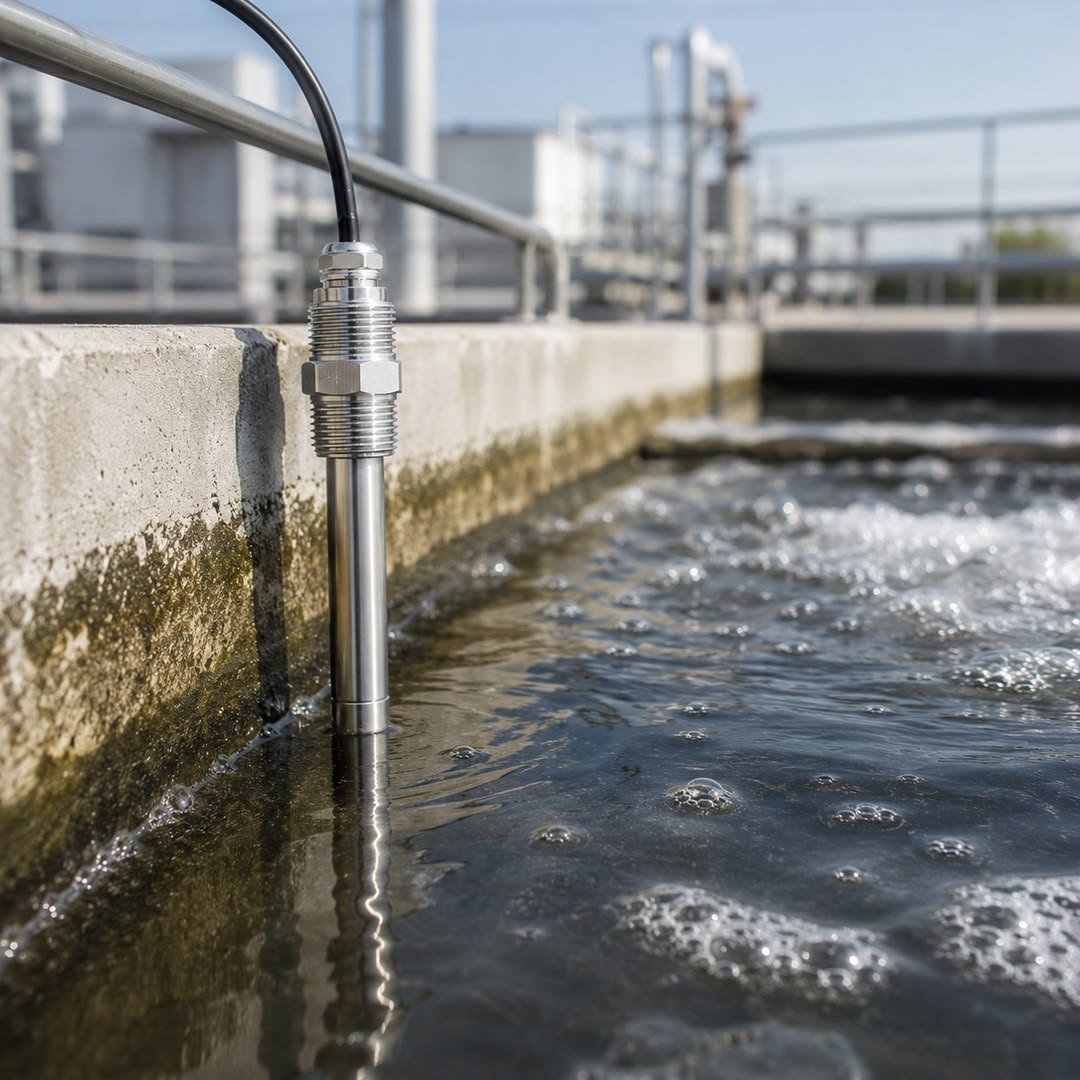
High precision scientific water testing probe

Advanced Sensor Capabilities

Our comprehensive range of analytical probes is built to withstand harsh chemical environments while delivering uncompromising measurement accuracy.

Smart Electrodes

Available in both digital and analog variants, offering drift-free micro-voltage signal processing.

Plug & Play

Standardized NPT threaded fittings for rapid inline pipe installation or tank immersion.

Anti-Fouling Design

Optional self-cleaning mechanisms (air-blast/wiper) specifically designed for dirty wastewater.

Universal Integration

Seamlessly outputs 4-20mA or RS485 Modbus RTU signals to any standard PLC or controller.

Measurement Architecture

Our sensors transform raw chemical interactions into structured digital signals, closing the loop on automated water treatment.

Stage 1: In-line Immersion

The specialized probe is installed directly into the process piping using a flow-through tee, or immersed into a holding tank. The sensing tip is kept continuously in contact with the fluid.

Stage 2: Signal Conversion

As the fluid interacts with the electrode's reference gel or optical lens, micro-voltage variations occur. Smart onboard transmitters instantly process and temperature-compensate these raw variations.

Stage 3: Data Transmission

The calibrated digital signal is transmitted via industry-standard protocols (like 4-20mA analog loops or RS-485 Modbus) directly to a local display controller, a centralized PLC, or an IoT gateway.

Stage 4: Action & Automation

Based on the exact real-time data received, the central controller triggers pre-programmed logic—such as automatically turning on a chemical dosing pump, activating a blowdown valve, or alerting an operator.

Technical Specifications

Our sensor portfolio covers the entire spectrum of water quality analysis. We provide application-specific housings to match your fluid's temperature and corrosivity.

Available Parameters
pH, ORP, Conductivity, TDS, Dissolved Oxygen (DO), Turbidity, Residual Chlorine
Output Signal Types
4-20mA Analog, RS-485 Modbus RTU
Housing Material (MoC)
CPVC, PTFE (Teflon), SS316, Titanium (Depending on fluid corrosivity)
Operating Temperature
0°C to 100°C (High-temperature specific models available up to 130°C)
Maximum Pressure
Up to 10 Bar (145 psi) standard
Calibration Methods
2-point or 3-point digital calibration (Buffer solutions required)
Pharmaceuticals (WFI)
Drinking Water Grids
ETP / STP Optimization
Cooling Tower Control
Aquaculture Monitoring

Frequently Asked Questions

Can these sensors connect to my existing PLC?
Yes. We engineer our analytical sensors to be universally compatible. They provide standard industrial outputs—either a 4-20mA analog loop or an RS-485 digital signal (Modbus RTU)—allowing them to plug directly into virtually any brand of PLC or SCADA system.
How often do the sensors require calibration?
Calibration frequency is highly dependent on the quality of the water being measured. In clean water, pH and ORP sensors generally require monthly calibration. Conductivity sensors are highly stable and may only need calibration every 6 months. Harsh effluent streams will require more frequent checks.
Do you offer sensors for very harsh or dirty wastewater?
Absolutely. For high-turbidity applications like raw effluent or aeration tanks, we provide ruggedized probes equipped with self-cleaning mechanisms. These include automated air-blast nozzles or mechanical wipers that routinely clear the optical lens or electrode surface to prevent bio-fouling.
Can they be installed directly into pressurized pipes?
Yes. For pipelines, we supply standard threaded flow-through tees for easy inline installation. For critical pipelines that cannot be shut down during sensor maintenance, we offer hot-tap retractable assemblies that allow you to safely withdraw the sensor while the pipe remains under pressure.

Ready to gain total process control?

Share your required parameters and fluid characteristics with our engineers to configure the perfect analytical sensor array.