
info@ecoserveindia.com +91 98230 65028
Mon - Sat: 9:00 AM - 6:00 PM
Regulatory Compliance

Smart Environment Monitoring

High-precision, IoT-enabled continuous monitoring systems by Eco Serve India. Engineered for real-time tracking of water quality, stack emissions, and ambient air to ensure seamless CPCB/SPCB compliance.

Get a Quote View Specs
IoT Cloud Integration
Real-time Data Analytics
Direct CPCB Connectivity
System Overview

Engineered for Data Precision

Regulatory bodies increasingly mandate Online Continuous Emission and Effluent Monitoring Systems (OCEMS) for industrial facilities. Traditional manual sampling is no longer sufficient; authorities require transparent, tamper-proof, 24/7 visibility into your environmental footprint.

Eco Serve India’s advanced monitoring stations provide highly accurate, real-time data on critical environmental parameters. Our end-to-end solutions include high-grade sensor probes, localized data loggers, secure telemetry gateways, and dedicated cloud dashboards that integrate directly with central pollution control board servers.
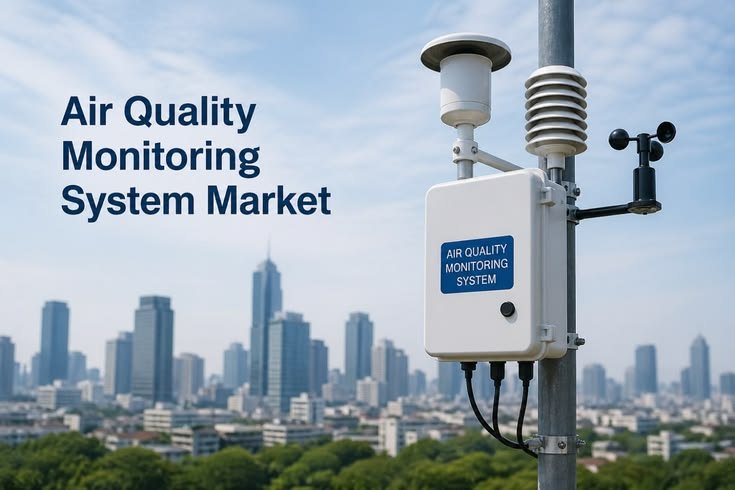
environment monitoring equipment

Advanced System Features

Our monitoring architectures are built on robust hardware and secure software protocols, ensuring your facility remains compliant without any data loss.

Smart Sensors

Industrial-grade, highly calibrated probes ensuring accuracy for pH, COD, BOD, and hazardous gases.

IoT Telemetry

Secure 4G/LTE gateways with edge computing ensuring data transmission even in remote locations.

Cloud Dashboard

Web-based portal providing real-time visualization, historic trend analysis, and report generation.

Automated Alerts

Instant SMS and Email notifications configured for threshold breaches or device malfunctions.

Data Acquisition Architecture

Our continuous monitoring ecosystem transforms raw physical parameters into structured, compliant digital reports transferred securely to authorities.

Stage 1: Parameter Sensing

Specialized probes and analyzers are installed directly at the source—whether it's an effluent discharge pipeline (ETP outfall) or an industrial chimney stack. These sensors continuously detect physical and chemical variations.

Stage 2: Signal Conditioning

The raw analog or digital signals from the probes are fed into an industrial Data Acquisition System (DAS) or local Data Logger. Here, the signals are normalized, calibrated against known standards, and digitized.

Stage 3: Secure Telemetry

The digitized data is passed to an IoT gateway. Using encrypted protocols (like MQTT or FTP), the gateway transmits the data packets securely over a cellular network to our centralized cloud infrastructure.

Stage 4: Analytics & Compliance Feed

The cloud platform organizes the data into intuitive dashboards for plant managers. Simultaneously, dedicated API channels push the required compliance data directly to the CPCB/SPCB servers in real-time.

Technical Specifications

Our OCEMS solutions are highly modular, supporting an array of protocols to seamlessly integrate into any existing industrial setup.

Water Parameters (Effluent)
pH, Temperature, TSS, COD, BOD, Flow, Color, Conductivity
Air/Stack Parameters
PM2.5, PM10, SO2, NO2, CO, CO2, O3, Stack Flow, Velocity
Data Logger / Analyzer
32-bit ARM Cortex, Multi-channel inputs (Analog/Digital)
Communication Protocols
RS485 Modbus RTU, 4-20mA, TCP/IP, MQTT, FTP/SFTP
Enclosure Rating
IP65 / IP67 / NEMA 4X (Weatherproof & Anti-corrosive)
Power Options
230V AC mains / Solar Panel setup for remote off-grid locations
Effluent OCEMS
Stack Emissions
Ambient Air Quality (CAAQMS)
Weather Stations
River/Surface Water

Frequently Asked Questions

What is OCEMS and who is required to have it?
OCEMS stands for Online Continuous Emission/Effluent Monitoring System. The Central Pollution Control Board (CPCB) of India has mandated the installation of these systems for 17 categories of highly polluting industries, as well as Common Effluent Treatment Plants (CETPs), to ensure strict compliance with discharge limits.
How does the data reach the Pollution Control Board?
The sensors capture data which is sent to a local IoT gateway/data logger. This gateway uses an internet connection (typically via a 4G SIM) to transmit the data securely to our cloud servers. From there, dedicated and secure APIs automatically push the required formatted data directly to the CPCB/SPCB portal.
What happens if the internet connection drops?
Data integrity is our priority. Our IoT gateways are equipped with edge computing capabilities and onboard SD card storage. If the network goes down, the system continues to log data locally. Once connectivity is restored, it automatically synchronizes the backlog with the cloud servers, ensuring zero data loss.
How often do the sensors require calibration?
Calibration frequency depends on the specific parameter being monitored and the harshness of the environment. Generally, critical probes (like pH, COD, BOD) require multi-point calibration every 1 to 3 months. Eco Serve India provides comprehensive AMC services to handle routine maintenance and standard calibrations.

Ready to digitize your environmental compliance?

Share your monitoring requirements with our engineers to design a robust, CPCB-compliant continuous monitoring architecture.