info@ecoserveindia.com +91 98230 65028
Mon - Sat: 9:00 AM - 6:00 PM
Industrial Wastewater

Advanced Effluent Treatment Plants

State-of-the-art ETP purification systems engineered by Eco Serve India. Designed for neutralizing toxic industrial effluents, ensuring strict environmental compliance, and integrating ZLD solutions.

Get a Quote View Specs
Guaranteed CPCB/SPCB Compliance
Advanced Chemical & Biological Processes
ZLD Integration Ready
System Overview

Engineered for Industrial Compliance

Industrial manufacturing processes generate complex wastewater laden with toxic chemicals, heavy metals, high COD/BOD levels, and suspended solids. Untreated discharge can severely damage ecosystems and result in heavy regulatory penalties.

Eco Serve India’s Effluent Treatment Plants (ETP) utilize tailored physico-chemical and advanced biological treatments to neutralize these contaminants. Our modular systems ensure that the treated water perfectly meets or exceeds all regulatory board guidelines for safe discharge or process reuse.
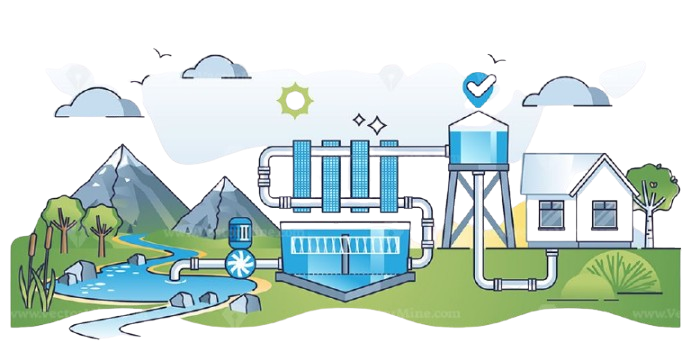
Effluent Treatment Plant System Overview

High-Performance ETP Features

Our custom ETP systems are robustly built to handle highly variable effluent loads, ensuring consistent results regardless of manufacturing fluctuations.

Chemical Optimization

Precise dosing stations for rapid coagulation and pH neutralization of toxic streams.

Biological Remediation

High-efficiency MBBR/SBR reactors aggressively breakdown complex organic COD/BOD.

ZLD Capability

Ready to integrate with RO and Evaporators for Zero Liquid Discharge architectures.

Smart Automation

PLC-based smart controls require minimal manual intervention or oversight.

The Treatment Process

Industrial effluents require a strategic, multi-staged approach to effectively remove distinct layers of chemical and biological pollutants.

Stage 1: Equalization & Neutralization

Variable raw effluent is collected and mixed to achieve a uniform concentration and flow rate. Automated chemical dosing adjusts the pH to an optimal level for subsequent treatment stages.

Stage 2: Physico-Chemical Treatment

Coagulants and flocculants are added to aggregate suspended solids, heavy metals, and dyes. This mixture enters a clarifier or Dissolved Air Flotation (DAF) unit where the heavy sludge is separated.

Stage 3: Biological Aeration

The clarified effluent enters aerobic or anaerobic reactors where specialized microbial cultures consume and dramatically reduce the remaining dissolved organic matter (BOD/COD).

Stage 4: Tertiary Polishing & Sludge Handling

Treated water passes through Sand/Carbon filters for final polishing. Generated sludge is processed through a Filter Press or Centrifuge, resulting in dry cakes for safe disposal.

Technical Specifications

Built with robust materials to withstand harsh industrial environments. We customize every ETP based on comprehensive treatability studies.

Plant Capacity Range
5 KLD to 10+ MLD (Kilo Liters per Day)
Core Technologies
Physico-Chemical, MBBR, SBR, Anaerobic Digestion, Advanced Oxidation Process (AOP)
Material of Construction (MoC)
Civil Concrete, MS Epoxy/FRP Coated, SS 304, SS 316 for highly corrosive streams
Sludge Dewatering
Chamber Filter Press, Decanter Centrifuge, Sludge Drying Beds
Automation & Controls
Fully Automated PLC/SCADA integration with online continuous monitoring sensors (OCEMS)
Pharmaceuticals
Textiles & Dyeing
Chemical Plants
Food & Beverage
Electroplating & Auto

Frequently Asked Questions

How do you treat high COD/BOD industrial effluent?
We design customized ETPs that utilize a combination of robust Physico-Chemical pre-treatment to handle initial shock loads, followed by advanced biological reactors (like MBBR or SBR) where highly acclimated microbial cultures rapidly consume and break down complex organic compounds.
Can your ETPs be upgraded to Zero Liquid Discharge (ZLD)?
Yes. Our ETPs are designed with modularity in mind. They can act as the primary foundational stage for a ZLD system. We seamlessly integrate Ultrafiltration (UF), Reverse Osmosis (RO), and Multi-Effect Evaporators (MEE) to achieve 100% recycling of your wastewater.
What happens to the hazardous sludge generated?
Chemical and biological sludge generated during treatment is pumped to a sludge holding tank. It is then mechanically dewatered using a Filter Press or Centrifuge. The resulting dry solid "cake" is then safely bagged and sent to an authorized hazardous waste disposal facility (CHWTSDF) as per SPCB norms.
Do you provide custom treatability studies?
Absolutely. Because every industrial effluent is unique, our engineers first collect samples from your facility and perform extensive lab-scale treatability studies to determine the exact chemical dosing and biological retention times needed before finalizing the plant design.

Ready to implement sustainable wastewater solutions?

Connect with our environmental engineers to conduct a treatability study and design an optimized, compliant ETP.